Home > News > Industry News
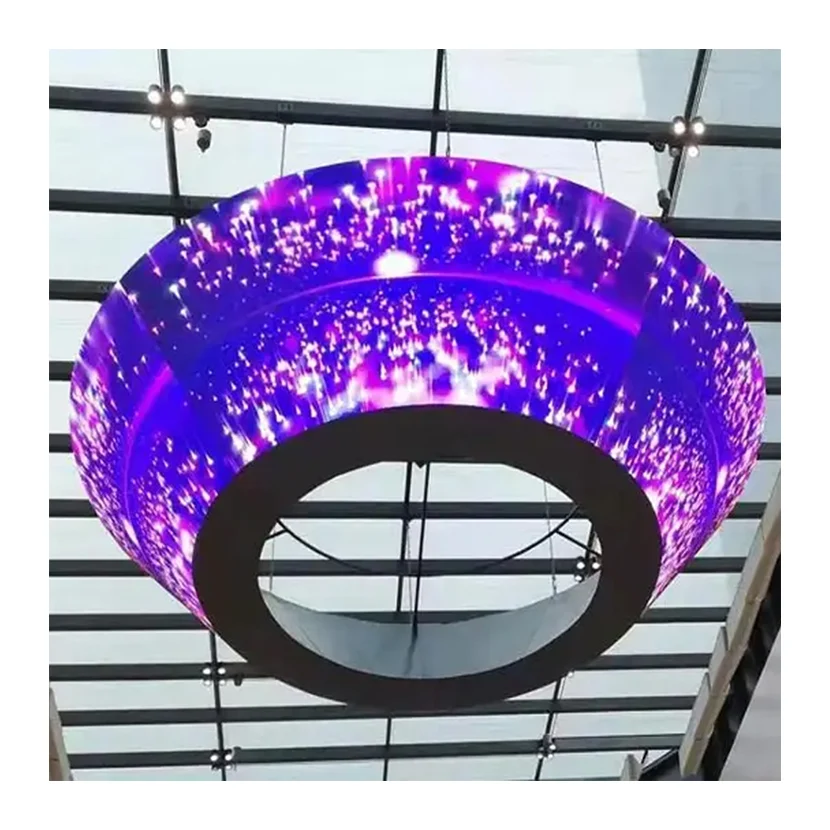
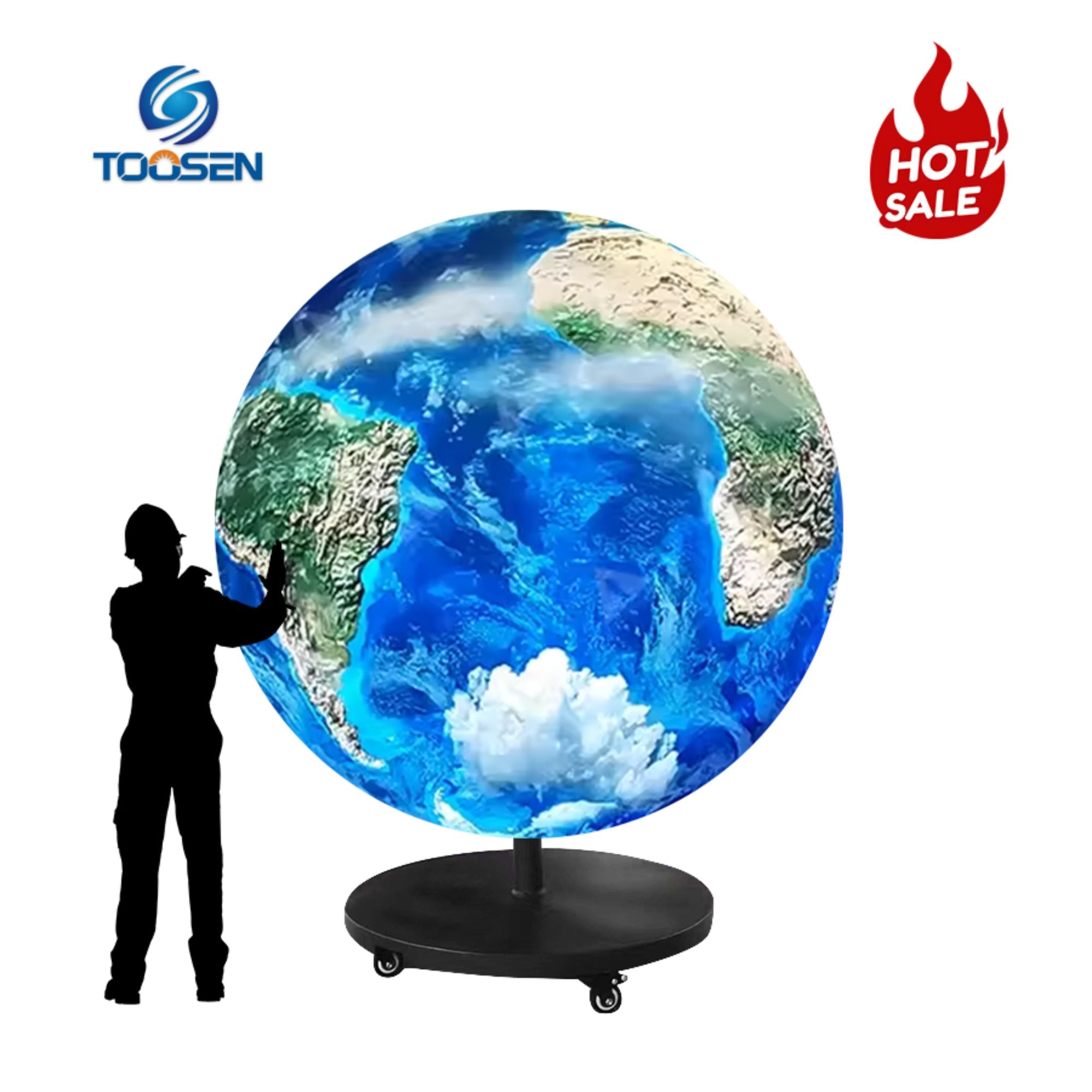
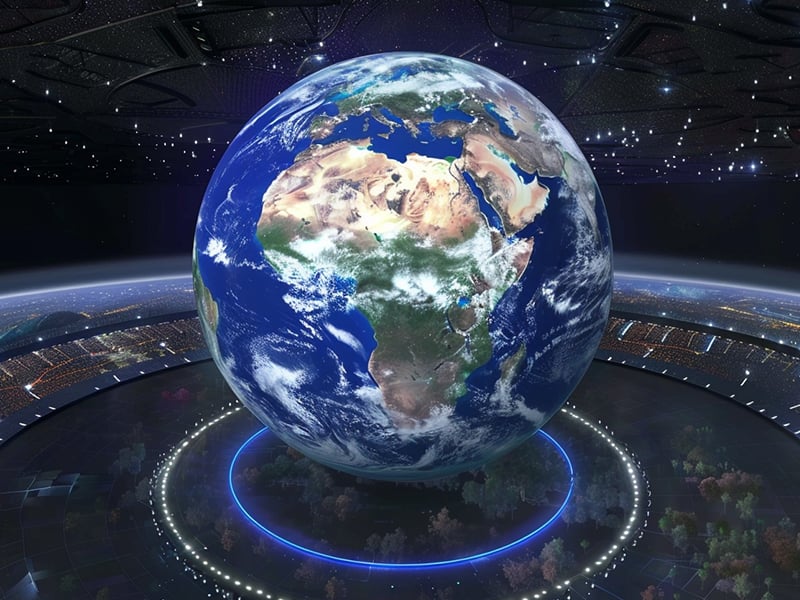
Sphere LED screens are changing the way people experience digital content. In recent years, this unique display form has grown fast in the creative display market. Brands, museums, science centers, and commercial spaces now use spherical LED displays to attract attention and create immersive experiences.
Market data shows strong growth. In 2024, the global market value of sphere LED screens reached USD 527 million. By 2031, it is expected to approach USD 5.89 billion, with a steady annual growth rate. This growth is much higher than that of traditional flat LED screens. Clearly, spherical LED display technology is becoming a key trend.
In this guide, we explain why sphere LED screens work so well, what technical specs matter most, and how Toosen delivers reliable spherical LED solutions.
First, sphere LED screens naturally stand out. The human eye is drawn to curved and moving objects. A spherical screen breaks the привычный flat shape and creates visual surprise.
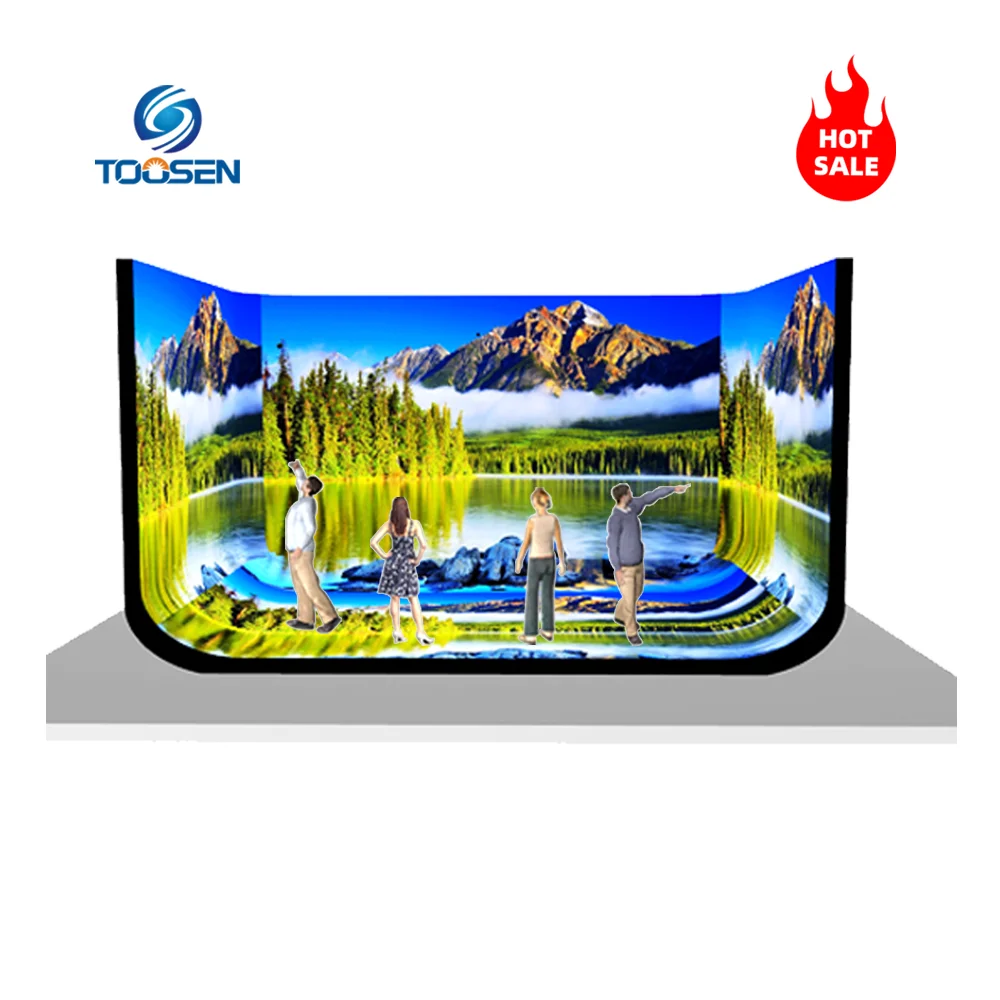
Research shows that 3D and creative LED displays can reach an attention rate of up to 85%. In comparison, traditional flat advertising screens usually stay at 40–50%. Even more important, curved and spherical LED displays improve ad recall by more than three times. Brand recognition can increase by around 40%.
In addition, a spherical LED screen adds a strong sense of technology. When combined with lighting, sound, and spatial design, it creates a full immersive environment. This makes it ideal for brand launches, exhibitions, planetariums, shopping malls, and science museums.
Common related keywords include:
sphere LED screen for advertising
spherical LED display solution
3D creative LED screen
immersive LED display
Choosing the right sphere LED screen is not just about looks. Technical details matter. Below are the most important factors.
Pixel pitch defines image clarity. A smaller pixel pitch means higher resolution.
P2 or smaller works well for close viewing.
P5 or larger suits large spheres or long viewing distances.
P2.5 is a popular choice. It offers clear visuals and reasonable cost.
The right pixel pitch depends on viewing distance, sphere diameter, and budget. If you are unsure, Toosen can help you choose the best option.
Brightness affects visibility under different light conditions.
Indoor sphere LED screens usually need 800–1200 nits.
Outdoor spherical LED displays often require 5000 nits or more.
Higher brightness ensures clear content even under strong light.
Refresh rate controls how smooth the image looks. A higher refresh rate means smoother video and no flicker on camera.
Grayscale defines how well the screen shows color depth. Higher grayscale levels create richer and more natural images. This is especially important for planet-style or artistic content.
Heat management is one of the biggest challenges for sphere LED screens. Unlike flat screens, a sphere is a closed structure. Heat can easily build up inside.
To solve this, most professional sphere LED displays use aluminum PCBs. Aluminum transfers heat much better than traditional fiber boards. It helps move heat away from the LED chips quickly.
For medium and large spheres, active cooling is often required. Strong exhaust fans are usually placed at the top. Air inlets are placed at the bottom or sides. This creates negative pressure and pulls hot air out.
For small sphere LED screens, natural airflow may be enough. Designers often use hollow or grid-style internal frames. This reduces air blockage and supports natural air circulation.
For outdoor sphere LED displays, cooling and waterproof design must work together. Waterproof fans and rain-proof vents are essential. Sun exposure must also be considered.
Poor heat dissipation can shorten LED lifespan. It may cause dead pixels, glue aging, and color issues. This is why professional design is critical.
A sphere cannot be built from standard rectangular LED modules. Instead, it uses custom-shaped modules, such as triangles, trapezoids, hexagons, or diamonds.
Toosen uses a riveted structural design for its sphere LED screens. This structure improves surface smoothness and reduces visible seams. It also supports precise curvature, which is essential for a true spherical shape.
Seamless structure improves both appearance and reliability. It also helps reduce image breaks and alignment errors.
Playing normal 16:9 video directly on a sphere will cause distortion. The top may shrink, and the middle may stretch.
To solve this, sphere LED screens use 3D mapping technology.
First, the control system builds a full 3D model of the sphere. Then, video content is wrapped onto this model like a digital skin. The system calculates the exact position of every pixel on the curved surface.
High-end video processors, such as NovaStar or Brompton systems, support custom module mapping files. These files tell the system that the display is not flat. The processor pre-compresses or pre-stretches the image. This cancels out visual distortion on the sphere.
In addition, custom content design plays a key role. Designers often create videos based on the sphere’s UV layout. As a result, content like planets, eyes, or sci-fi visuals looks natural and balanced on the spherical LED screen.
Toosen is a professional manufacturer of spherical LED displays. The company focuses on creative LED display solutions and supports both OEM and ODM projects.
Toosen provides:
Custom sphere sizes and pixel pitches
Reliable heat dissipation design
Seamless curved module structures
Professional 3D mapping and control support
Whether for indoor or outdoor use, Toosen helps clients turn creative ideas into stable, high-impact displays.
1. What is the best pixel pitch for a sphere LED screen?
It depends on viewing distance and sphere size. P2.5 is a common choice that balances clarity and cost.
2. Can a sphere LED screen be used outdoors?
Yes. Outdoor sphere LED displays require high brightness, waterproof design, and proper heat dissipation.
3. How do sphere LED screens avoid image distortion?
They use 3D mapping technology, custom module files, and professional video processors to correct distortion.
 EN
EN
 AR
AR
 BG
BG
 HR
HR
 CS
CS
 DA
DA
 NL
NL
 FI
FI
 FR
FR
 DE
DE
 EL
EL
 HI
HI
 IT
IT
 JA
JA
 KO
KO
 NO
NO
 PL
PL
 PT
PT
 RO
RO
 RU
RU
 ES
ES
 SV
SV
 TL
TL
 ID
ID
 SR
SR
 UK
UK
 VI
VI
 ET
ET
 HU
HU
 TH
TH
 TR
TR
 FA
FA
 AF
AF
 MS
MS
 GA
GA
 HY
HY
 AZ
AZ
 MN
MN
 UZ
UZ