Home > News > Industry News
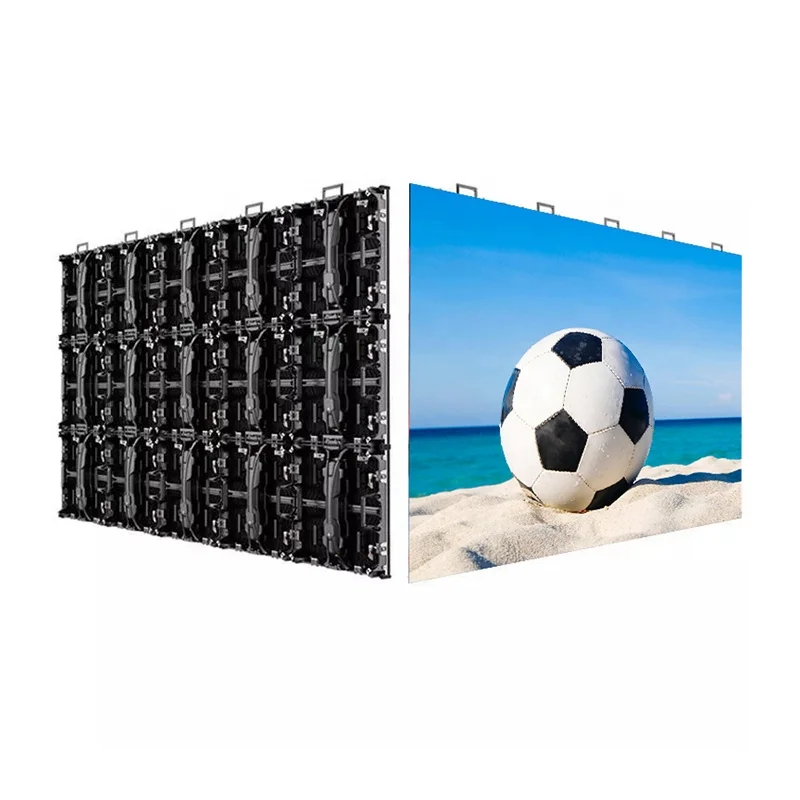
In modern sports stadiums, LED screens are no longer optional. They are essential. Stadium LED displays show live match content, share real-time data, run advertising, and support fan interaction. They also help with crowd control and emergency management.
More importantly, LED screens directly shape how fans experience a game. This article explains how stadiums can use LED screens to enhance viewing, engagement, and long-term value.
First, LED screens help fans feel closer to the action.
High-refresh-rate LED displays deliver smooth images with no motion blur. Toosen’s LED screens reach refresh rates of 3840Hz to 7680Hz. This allows clear slow-motion replays and sharp close-ups of key moments, such as goals, fouls, and referee decisions.
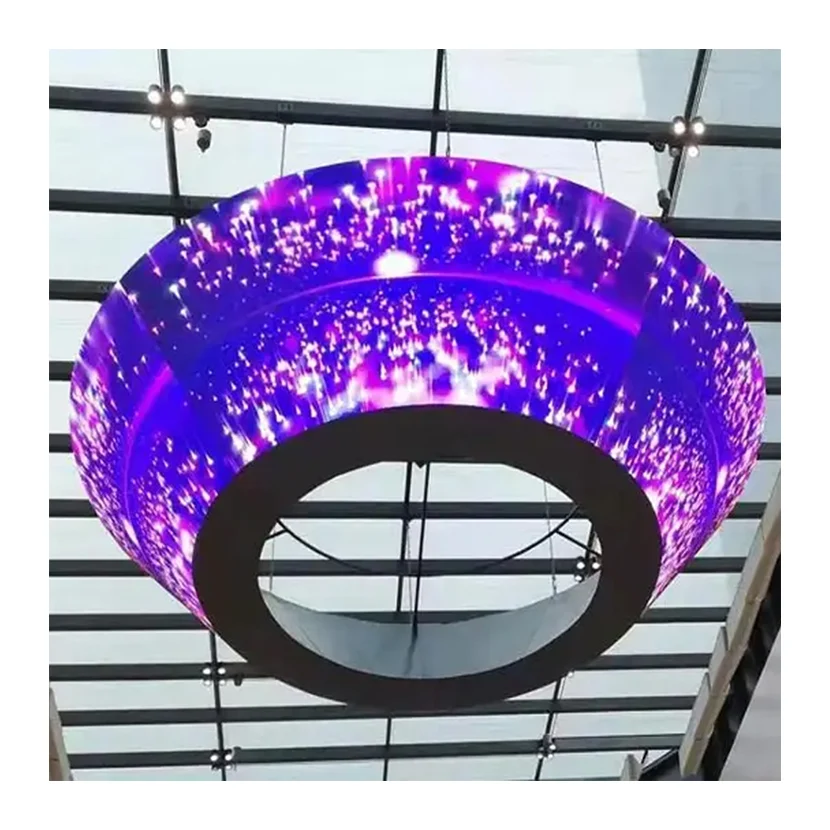
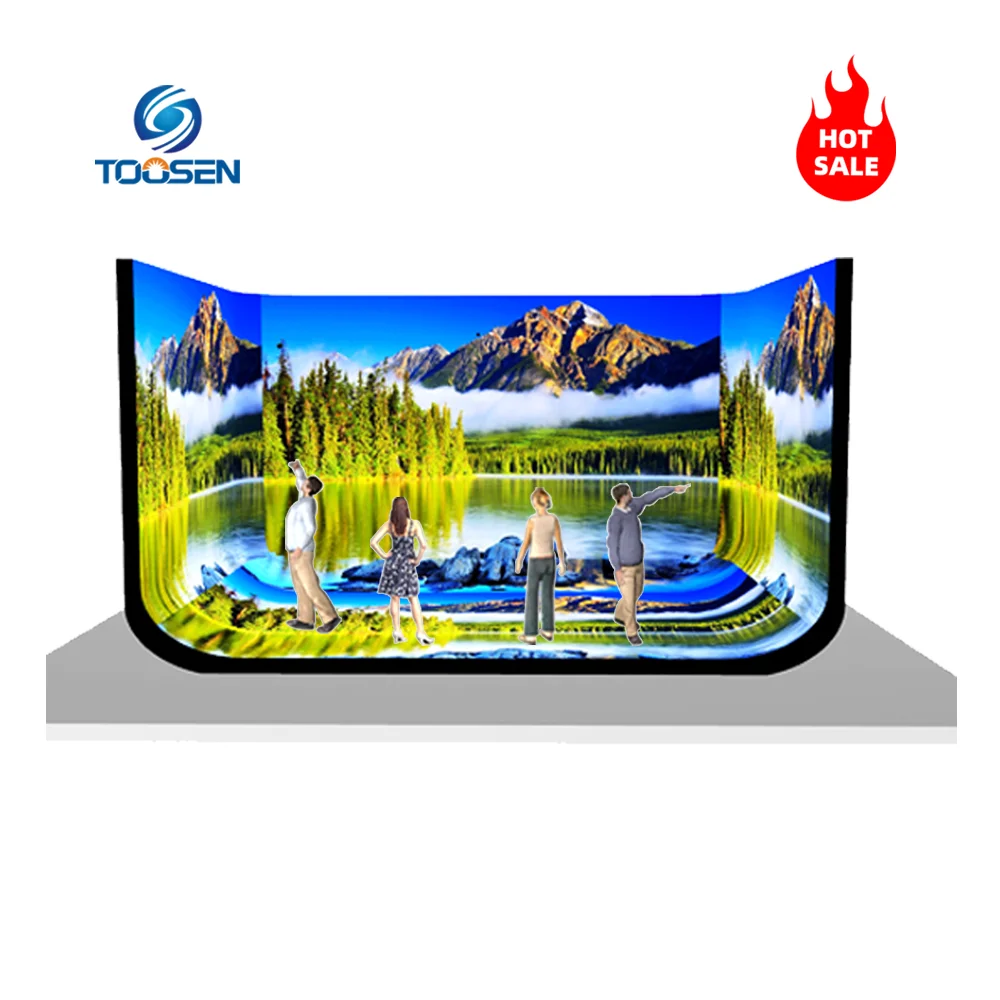
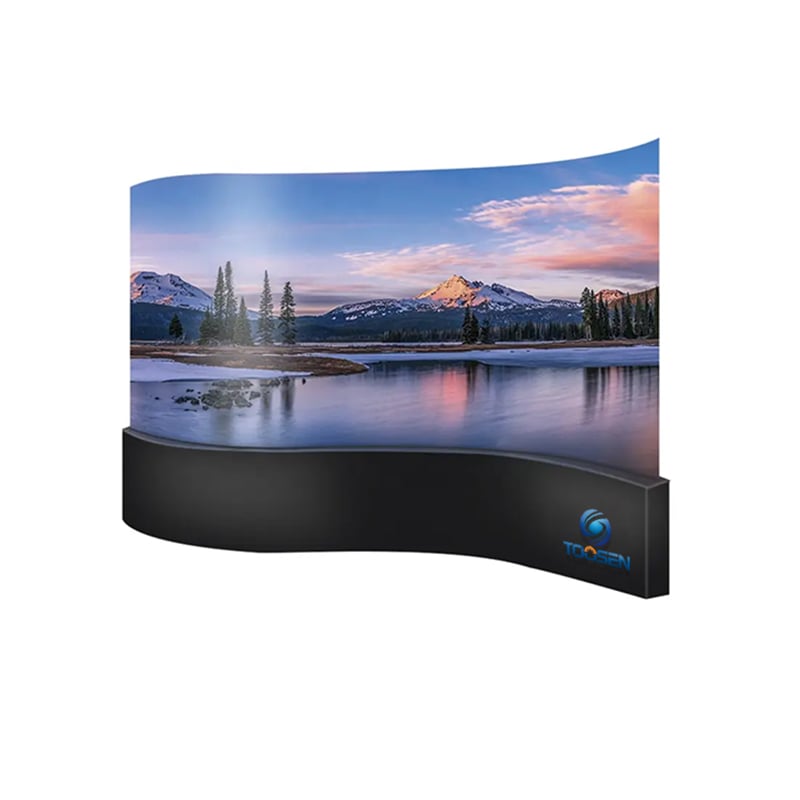
In addition, multi-camera switching lets fans see player expressions and critical details that may be missed from distant seats. For large venues, curved LED screens or circular LED displays provide near 360-degree coverage. As a result, every fan gets a clear view, no matter where they sit.
Today’s LED screens are no longer passive displays. They are interactive tools.
During breaks or halftime, stadium cameras can randomly capture fans and show them on the big screen. This simple interaction often creates laughter, applause, and strong emotional moments.
At the same time, stadiums can encourage fans to post content on social media using specific hashtags. Selected photos, videos, or comments can appear on LED screens in real time. This connects online engagement with the live event.
In addition, stadium apps allow fans to vote, predict outcomes, or join prize games. LED screens then display the results instantly. These interactions turn fans from observers into participants. As a result, emotional connection and brand loyalty increase.
LED screens also play a key role in stadium operations.
High-brightness LED displays remain visible in all lighting conditions. Stadiums can use them to show clear entrance directions, seating maps, and wayfinding information. This helps fans find their seats faster and reduces congestion.
Moreover, LED screens can display schedules, announcements, and updates in real time. In emergency situations, they can issue alerts and evacuation instructions quickly. This improves safety and reduces risk.
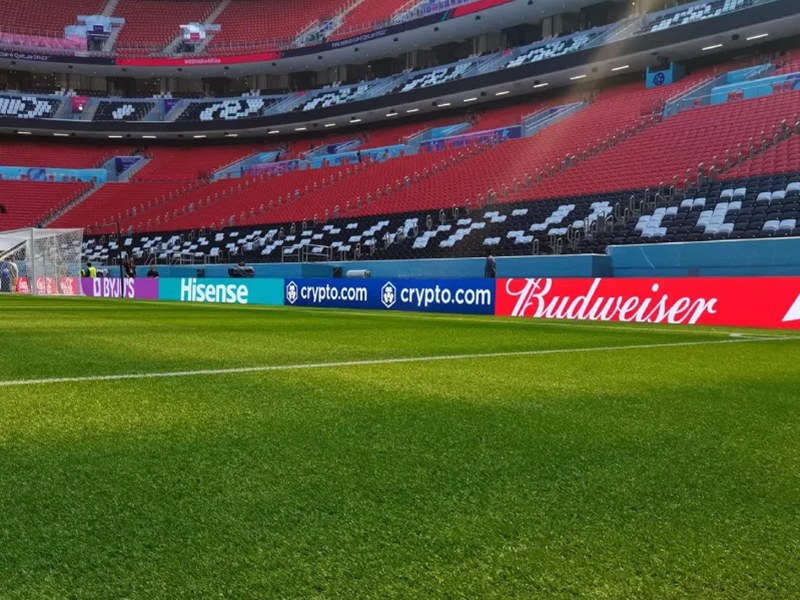
LED screens are powerful advertising tools.
Without interrupting the game, stadiums can display sponsor ads around the venue. Because LED content updates instantly, different ads can run at different times. This flexibility increases advertising value while avoiding audience fatigue.
As a result, stadiums can maximize sponsorship income without harming the fan experience.
Creative LED screen design can transform a stadium into a city landmark.
By combining LED displays with local culture or architectural style, stadiums become more recognizable and visually impressive. This strengthens the venue’s brand image and increases its appeal for major events.
LED screens offer strong long-term benefits.
They feature long lifespans, often reaching up to 100,000 hours. They also consume less energy, which supports sustainable operations and lower running costs.
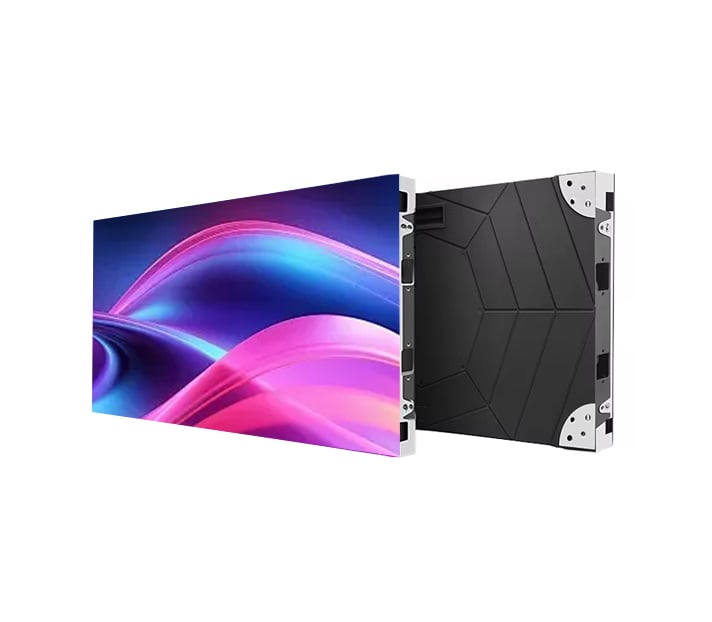
Modern stadiums host more than sports events. They also hold concerts, exhibitions, and corporate events. Thanks to modular LED design, screens can adapt to different layouts and content needs. This flexibility increases usage frequency and improves long-term return on investment.
LED screens do much more than display scores. They enhance immersion, boost interaction, improve safety, and generate revenue. For modern sports stadiums, LED displays are a strategic investment that improves both fan satisfaction and operational performance.
1. What types of LED screens are commonly used in stadiums?
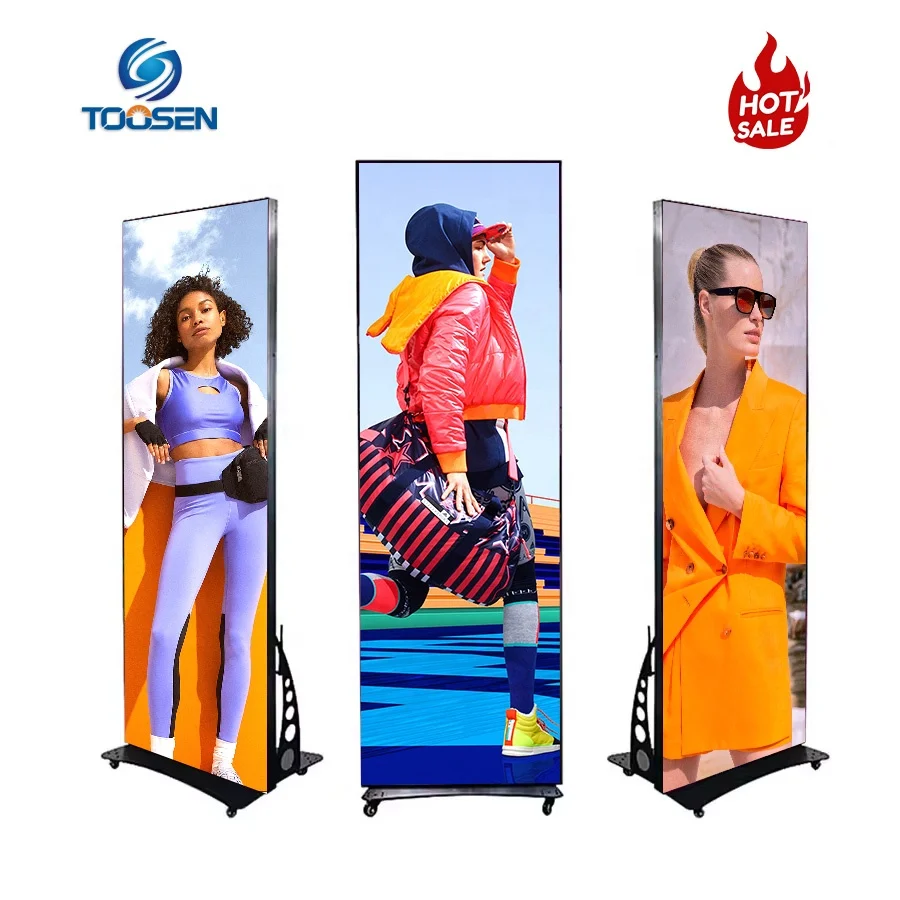
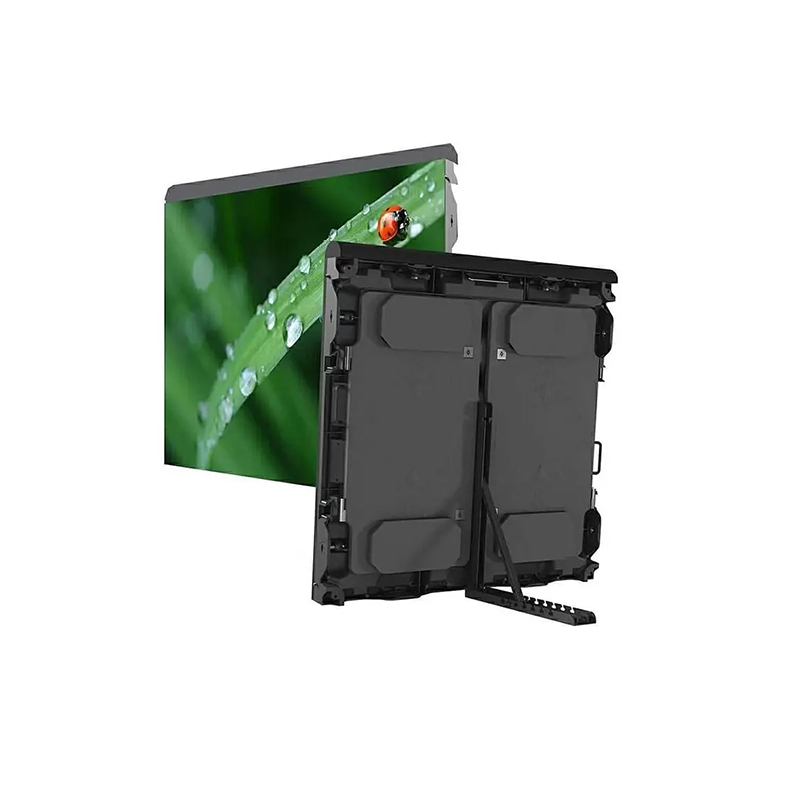
Stadiums often use center-hung LED screens, perimeter LED displays, curved LED screens, and ribbon LED boards for both viewing and advertising.
2. How do LED screens improve fan engagement?
They enable live replays, fan interactions, social media displays, voting, and games, which make fans feel involved in the event.
3. Are stadium LED screens energy-efficient?
Yes. Modern LED screens consume less power, support brightness control, and offer long lifespans, making them cost-effective over time.
 EN
EN
 AR
AR
 BG
BG
 HR
HR
 CS
CS
 DA
DA
 NL
NL
 FI
FI
 FR
FR
 DE
DE
 EL
EL
 HI
HI
 IT
IT
 JA
JA
 KO
KO
 NO
NO
 PL
PL
 PT
PT
 RO
RO
 RU
RU
 ES
ES
 SV
SV
 TL
TL
 ID
ID
 SR
SR
 UK
UK
 VI
VI
 ET
ET
 HU
HU
 TH
TH
 TR
TR
 FA
FA
 AF
AF
 MS
MS
 GA
GA
 HY
HY
 AZ
AZ
 MN
MN
 UZ
UZ