Home > News > Industry News
As LED screen use keeps growing, installation scenes are no longer simple. Today, LED screens appear in shopping malls, offices, stadiums, streets, museums, and many special spaces. Because of this, the installation environment has become more complex.
In general, LED screen projects fall into three categories: indoor, outdoor, and special scenarios. Each one has different demands. These demands affect protection level, performance, structure, and most importantly, maintenance method.
Maintenance design mainly includes front service and rear service. This choice also affects screen thickness, installation cost, and long-term operation cost. In this article, we explain what front service and rear service LED screens are, how they differ, and how to choose the right solution.
What Is a Front Service LED Screen?
A front service LED screen allows technicians to install, remove, and repair modules from the front side, which is the viewing side.
In this design, LED modules are not fixed only by screws from the back. Instead, they use special structures. These include mechanical locks, knobs, or magnetic systems. All of them can be operated from the front.
During maintenance, the technician stands in front of the screen. With a tool or by hand, the faulty module is unlocked and removed. A new module is then installed and locked in place.
Key Advantages of Front Service LED Screens
First, no rear space is needed. This is the biggest benefit. The screen can mount directly on a wall. It can also embed into a wall or fit into a corner.
Because of this, front service screens save valuable building space. They work very well in places such as:
Second, front service supports ultra-thin designs. Without a rear service channel, the cabinet can be very slim. Some screens are thinner than 30 mm. These are often called wallpaper LED screens.
Third, maintenance is faster. One person can replace a module quickly. This is very helpful for high or hard-to-reach locations.
Limitations of Front Service LED Screens
However, front service also has limits.
Flatness control can be harder.
The locking structure is more complex than simple screws. On very large screens, this may slightly affect flatness. That said, modern manufacturing has reduced this issue a lot.
Visual impact at close distance.
If the lock design is poor, small uneven areas may appear when the screen is off. High-quality brands hide locks between LEDs to avoid this.
Higher demands on structure strength.
Modules rely on locking points around the edges. The locks must stay strong over time. They must not loosen or sag.
Cost can be slightly higher.
Precision cabinets and locking systems usually cost more than simple rear-service cabinets.
What Is a Rear Service LED Screen?
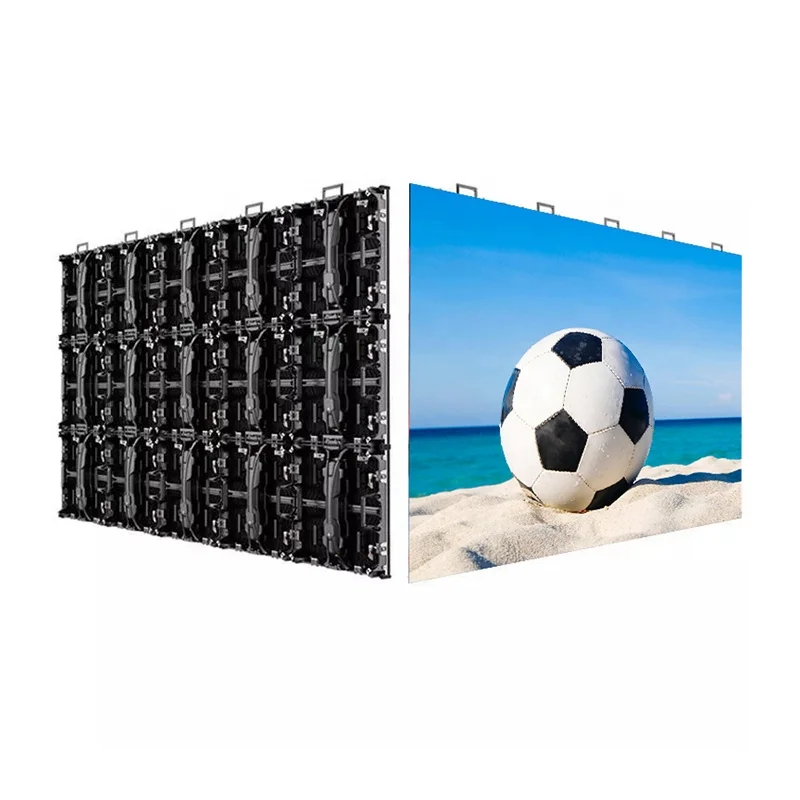
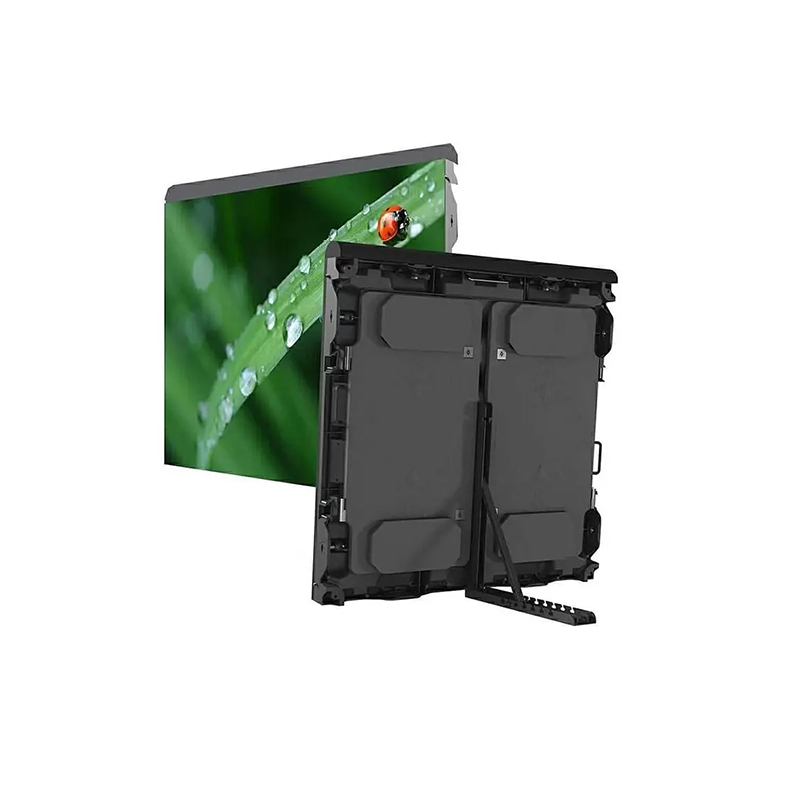
A rear service LED screen requires maintenance from the back side of the screen.
This design needs a service channel behind the screen. The width is usually at least 0.8 meters. Technicians enter this space to repair or replace modules and components.
Rear service uses a simple structure. Modules fix directly with screws. The force distribution is clear and stable. Because of this, rear service screens offer excellent flatness and long-term reliability.
Where Rear Service LED Screens Are Used
Rear service is very common in:
In fact, most outdoor LED screens must use rear service. Outdoor screens are thicker and heavier. They include waterproof layers, strong frames, cooling systems, and lightning protection.
Front service cannot easily support these heavy structures. It may also reduce the IP rating. Rear access is safer and more complete for outdoor maintenance.
Disadvantages of Rear Service LED Screens
The main drawback is space usage.
A rear service channel takes up building space. Because of this, rear service screens cannot mount directly on walls. They also do not work well in narrow areas.
How Maintenance Method Affects Screen Thickness
Maintenance design is one of the key factors that decides cabinet thickness.
Front Service and Ultra-Thin LED Screens
Front service makes ultra-thin LED screens possible.
Since no rear space is needed, the screen body can be very thin. Thickness depends mainly on cabinet strength and heat control.
To achieve this, manufacturers often use:
When a project requires an extremely thin screen, front service is almost always the only choice. This is common for wall-embedded or glass-mounted designs.
Rear Service and Standard Thickness
Rear service cabinets need space inside. This space holds power supplies, receiving cards, and cables. It also creates airflow for cooling.
Typical thickness ranges are:
Outdoor cabinets are thicker because they need higher waterproof levels and stronger cooling systems. Some even use air conditioners or large fans.
Maintenance Method and Long-Term Operating Cost
The maintenance method also affects long-term operating expenses.
Labor and Time Cost
Front service
One technician can complete repairs from the front. The process is fast and simple. This saves labor time and cost. The advantage is clear for high or narrow locations.
Rear service
Technicians must enter the rear channel. Often, two people are needed. One works behind the screen. The other checks the image from the front. This takes more time and costs more. If the rear space is crowded or unsafe, the cost increases further.
Spare Parts and Consumables
Front service
Locking systems are more precise. If a lock breaks, replacement cost can be higher than a screw. However, easy access reduces accidental damage to nearby modules.
Rear service
The structure is simple. Screws are cheap and easy to replace. But during repair, cables and nearby modules are easier to touch by mistake.
How to Choose the Right Maintenance Method
There is no single best option. The right choice depends on your project.
Choose front service if:
Choose rear service if:
Conclusion
Front service and rear service LED screens each have clear strengths. Front service saves space and supports slim designs. Rear service offers simplicity and stability, especially for outdoor use.
Before choosing, always consider installation space, screen size, environment, and long-term maintenance cost. The right decision will improve both performance and value over time.
FAQ
1. Can outdoor LED screens use front service design?
In most cases, no. Outdoor screens need thick cabinets, waterproof layers, and heavy cooling systems. Rear service is safer and more reliable.
2. Are front service LED screens less stable over time?
Not if they are well designed. High-quality locking systems can stay stable for many years.
3. Does front service always cost more than rear service?
The cabinet cost may be slightly higher. However, lower labor and faster maintenance can reduce total operating cost.
 EN
EN
 AR
AR
 BG
BG
 HR
HR
 CS
CS
 DA
DA
 NL
NL
 FI
FI
 FR
FR
 DE
DE
 EL
EL
 HI
HI
 IT
IT
 JA
JA
 KO
KO
 NO
NO
 PL
PL
 PT
PT
 RO
RO
 RU
RU
 ES
ES
 SV
SV
 TL
TL
 ID
ID
 SR
SR
 UK
UK
 VI
VI
 ET
ET
 HU
HU
 TH
TH
 TR
TR
 FA
FA
 AF
AF
 MS
MS
 GA
GA
 HY
HY
 AZ
AZ
 MN
MN
 UZ
UZ