Home > News > Industry News
Wedding planners, venue managers, and couples constantly search for ways to create memorable wedding stages. While traditional floral backdrops remain popular, LED walls have become a powerful tool for enhancing wedding visuals and guest engagement.
However, choosing between a traditional backdrop and an LED wall is not always straightforward. Each option offers unique advantages, and the best choice often depends on the venue size, content requirements, and overall wedding style.
Modern weddings are no longer limited to static decorations. Couples want to tell stories, share memories, and create immersive experiences for guests. An LED wall makes this possible.
Unlike a traditional backdrop, an LED display can show dynamic content throughout the event. Wedding organizers can switch visuals instantly and keep the stage fresh from beginning to end.
One of the biggest advantages of an LED wall is its ability to showcase multimedia content.
Wedding teams can display:
As a result, guests stay engaged and connected to the couple's story throughout the celebration.
Venue size plays a major role when selecting stage technology.
In large ballrooms and banquet halls, guests seated at the back often struggle to see important moments on stage. An LED wall solves this problem by presenting large, bright visuals that remain visible from a distance.
With a properly sized LED display, wedding organizers can:
Consequently, every guest enjoys a similar viewing experience regardless of seating location.
Traditional backdrops usually remain unchanged throughout the event. In contrast, LED walls allow couples to transform the stage instantly.
For example, the display can show:
Therefore, one LED wall can replace multiple physical decorations while offering greater creative flexibility.
Although LED walls provide impressive visual impact, event planners should also consider several practical factors.
Wedding photography remains one of the most important aspects of any event.
When organizers place a large LED wall directly behind the couple, photographers may encounter challenges such as:
Because of these issues, some photographers prefer a traditional backdrop for portrait sessions and key stage photos.
Fortunately, modern LED display systems provide advanced brightness controls.
Event operators can:
By managing screen settings properly, organizers can significantly improve camera performance and image quality.
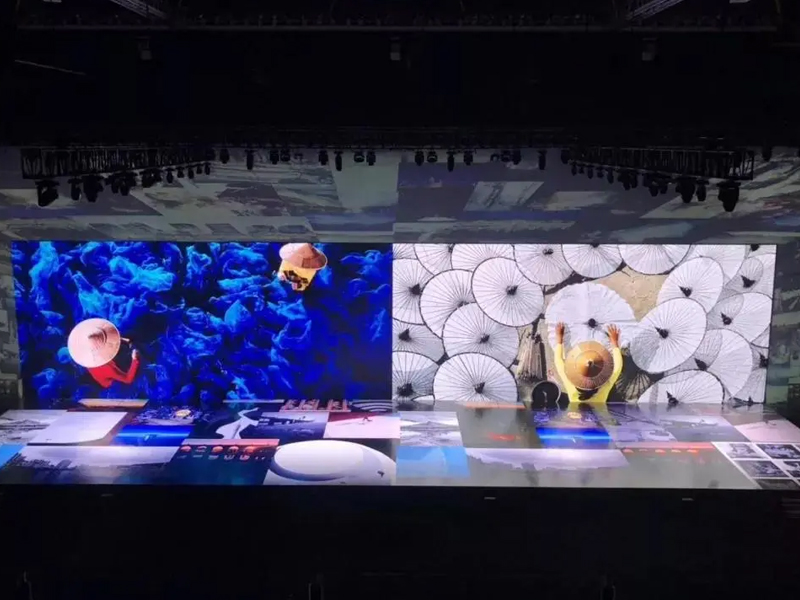
Many wedding professionals now combine both options instead of choosing one over the other.
This hybrid design typically includes:
This setup offers several advantages:
Maintains an elegant wedding aesthetic
Provides excellent photo opportunities
Displays videos and live feeds effectively
Improves visibility for distant guests
Reduces glare directly behind the couple
As a result, couples enjoy the beauty of traditional stage décor while still benefiting from modern display technology.
When selecting an LED wall for a wedding, consider the following factors:
For indoor wedding venues, common pixel pitches include:
Smaller pixel pitches deliver sharper images at closer viewing distances.
Choose the screen size based on:
Larger venues generally require larger displays to maintain visual impact.
Prepare content before the event, including:
Proper planning ensures smooth transitions and a professional presentation.
LED walls have transformed modern wedding stage design. They provide dynamic content, improve guest visibility, and create immersive visual experiences that traditional backdrops cannot achieve alone.
However, the most effective wedding stages often combine both technologies. A decorative backdrop delivers timeless elegance, while LED displays enhance storytelling and audience engagement.
For wedding planners, event companies, and venue operators, investing in a high-quality LED wall can elevate the overall event experience and help create unforgettable moments for every guest.
 EN
EN
 AR
AR
 BG
BG
 HR
HR
 CS
CS
 DA
DA
 NL
NL
 FI
FI
 FR
FR
 DE
DE
 EL
EL
 HI
HI
 IT
IT
 JA
JA
 KO
KO
 NO
NO
 PL
PL
 PT
PT
 RO
RO
 RU
RU
 ES
ES
 SV
SV
 TL
TL
 ID
ID
 SR
SR
 UK
UK
 VI
VI
 ET
ET
 HU
HU
 TH
TH
 TR
TR
 FA
FA
 AF
AF
 MS
MS
 GA
GA
 HY
HY
 AZ
AZ
 MN
MN
 UZ
UZ