Home > News > Industry News
Modern concert production has evolved far beyond traditional stage backdrops. Today, creative LED screens have become one of the most powerful tools in stage design. From giant spherical displays suspended above audiences to interactive LED floors that transform into oceans, these installations blur the line between reality and digital storytelling.
The world's biggest touring artists increasingly use custom-shaped LED screens to create immersive environments that surround audiences rather than simply displaying content. Here are four iconic concert stage designs that showcase how creative LED displays can completely redefine the live entertainment experience.
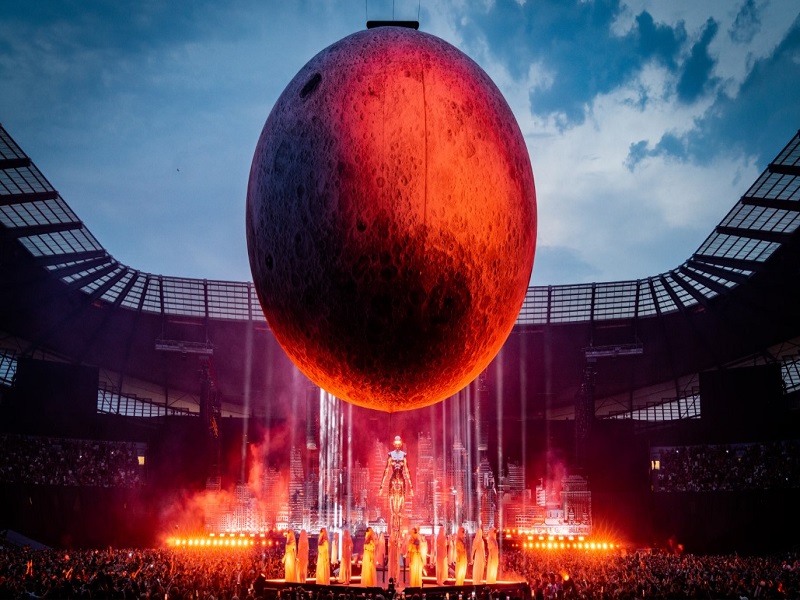
One of the most memorable stage elements in recent concert history was the massive spherical LED screen featured during The Weeknd's stadium tour.
Instead of relying on a conventional rectangular video wall, the production team suspended a giant LED sphere above the main stage. Measuring over 10 meters in diameter, the display functioned as a fully three-dimensional visual centerpiece visible from every seat in the stadium.
Throughout the performance, the sphere transformed from a cold silver moon into a glowing blood-red celestial body. Combined with atmospheric lighting and theatrical fog effects, the giant LED moon created an apocalyptic cinematic environment that reinforced the tour's dystopian aesthetic.
More importantly, the 360-degree viewing angle ensured that audiences experienced the visual impact regardless of their location inside the venue.
Transparent Double-Layer LED Display
U2 has long been known for pushing the boundaries of concert technology, and one of their most groundbreaking stage concepts featured a massive suspended transparent LED structure.
Stretching approximately 29 meters across the venue, the display consisted of two layers of high-transparency LED mesh screens. Between those layers, designers created a hidden walkway where band members could perform while surrounded by digital imagery.
As musicians moved through the structure, audiences could simultaneously see live performers and large-scale animated visuals projected onto the transparent screens. Pop-art graphics, AR-inspired effects, and motion visuals appeared to float around the performers rather than sit behind them.
The result was a striking fusion of physical performance and digital illusion.
Circular LED Displays and Spherical LED Elements
To support the band's cosmic and optimistic visual identity, Coldplay's stage designers abandoned traditional rectangular screens and embraced circular forms throughout the venue.
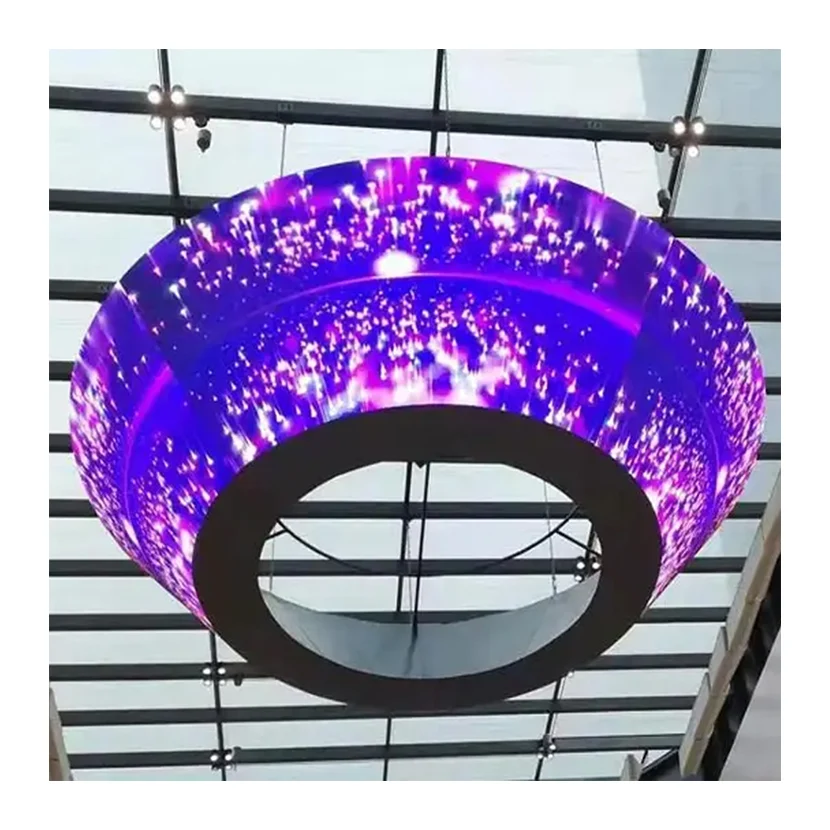
Large circular LED displays and glowing spherical structures hovered above the audience like planets floating in space. Rather than functioning solely as video screens, these elements became part of the stage architecture itself.
The displays showed live camera feeds enhanced with colorful visual effects while synchronizing with thousands of audience wristbands. Together, the LED screens and interactive lighting transformed the entire stadium into a living galaxy.
Instead of concentrating visual attention on a single stage area, the production extended the experience across the entire venue.
T-Shaped LED Floor Display
Taylor Swift's record-breaking stadium tour showcased one of the most sophisticated applications of LED floor technology ever seen in live entertainment.
While the giant background screens impressed audiences, the true innovation lay beneath the performers' feet. A massive T-shaped LED floor extended deep into the audience and connected seamlessly with the main stage displays.
Through precise synchronization between vertical and horizontal screens, the production created breathtaking naked-eye 3D illusions.
During certain performances, the floor appeared to crack open as Taylor walked across it. In another sequence, she seemed to dive directly into the stage, only for the LED floor to transform into a digital ocean showing her swimming underwater.
By turning the stage floor into an active storytelling surface, the production transformed a traditionally overlooked area into one of the show's most memorable visual features.
These world-class productions demonstrate a major shift in concert design philosophy. Instead of treating LED screens as simple video backdrops, designers now use them as architectural elements, interactive environments, and storytelling tools.
From giant spherical LED screens and transparent LED walls to circular displays and interactive LED floors, creative LED technology allows stage designers to break free from traditional rectangular formats and build fully immersive worlds around performers.
As LED technology continues to evolve, audiences can expect even more innovative stage concepts that merge digital content, lighting, architecture, and live performance into unforgettable experiences.
 EN
EN
 AR
AR
 BG
BG
 HR
HR
 CS
CS
 DA
DA
 NL
NL
 FI
FI
 FR
FR
 DE
DE
 EL
EL
 HI
HI
 IT
IT
 JA
JA
 KO
KO
 NO
NO
 PL
PL
 PT
PT
 RO
RO
 RU
RU
 ES
ES
 SV
SV
 TL
TL
 ID
ID
 SR
SR
 UK
UK
 VI
VI
 ET
ET
 HU
HU
 TH
TH
 TR
TR
 FA
FA
 AF
AF
 MS
MS
 GA
GA
 HY
HY
 AZ
AZ
 MN
MN
 UZ
UZ